
About Book
About The Book
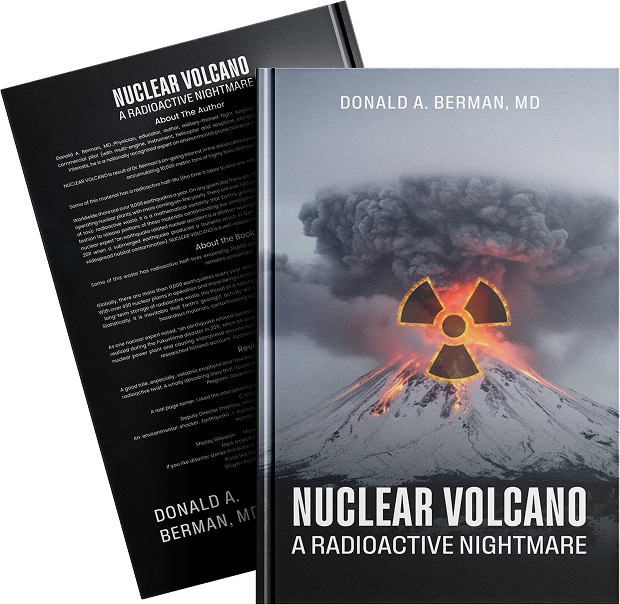
Nuclear Volcano
The story in Nuclear Volcano unfolds in a way that feels familiar, not because the events themselves are ordinary, but because real-world crises often begin with uncertainty.
It begins in Russia, where a failure at the Mayak nuclear complex sets off a chain of concern. Radiation leaks into the environment. Reports circulate, yet clarity remains out of reach. Scientists debate long-term consequences while officials attempt to manage public response.
For a time, the focus stays there.
Then, almost quietly, the narrative shifts toward California, a region already shaped by fault lines and seismic activity. Here, geologist Lee Burrell begins examining data that does not quite align with expectations. At the same time, journalist Richard Burrell starts asking questions others hesitate to pursue.
Neither of them expects to uncover anything extraordinary.
Yet small discoveries begin to build. Patterns in seismic readings. Geological formations suggesting deeper movement. Historical records remind us how often the Earth has reshaped itself without warning.
The novel draws subtle parallels to events like Pompeii, Krakatoa, and Mount St. Helens. These are not used for drama, but as reminders. The Earth does not remain still forever.
As the story unfolds, the line between human technology and natural forces begins to blur.
And what once felt like two separate risks starts to look like one unfolding reality.
Why Read It ?
Nuclear Volcano
There are many disaster stories, but not all of them stay with you.
Nuclear Volcano builds its tension differently. A nuclear accident raises questions. Geological data suggests something unusual. Scientists begin to consider that these events may not be isolated.
That gradual connection between details is what gives the story its weight.
For readers who enjoy science-based fiction, the novel offers more than just a plot. It explores how modern systems interact with forces that have existed far longer than human control.
At its core, the book asks a simple but unsettling question:
What happens when the systems designed to control risk begin colliding with forces that cannot be controlled at all?